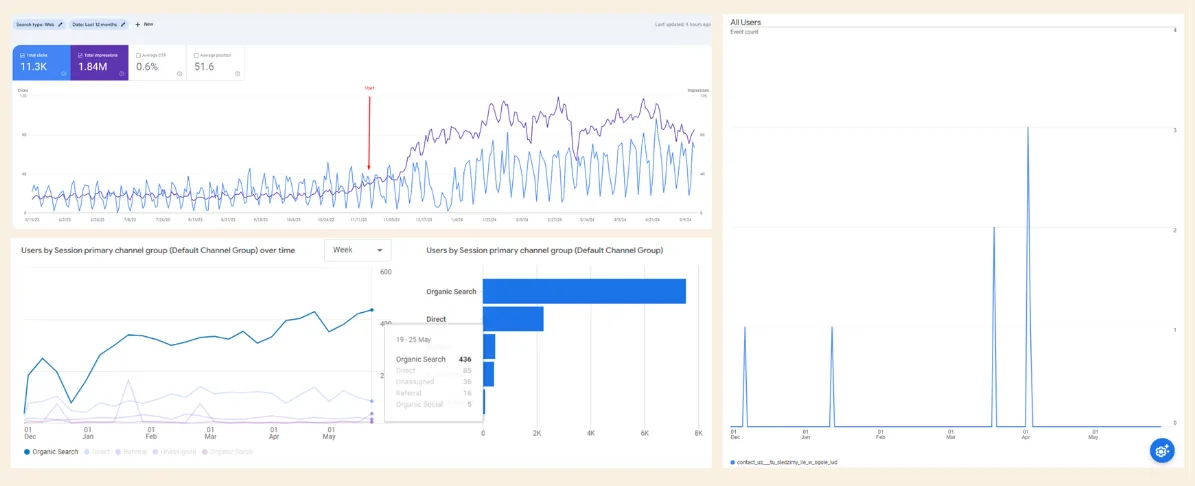
110% more organic trafficin six months,on a $6,362 budget.
A European software house selling workflow automation and Industry 4.0 work. Larger competitors owned the searches, the site competed with itself for the few it could win, and almost every enquiry still arrived through somebody who already knew them. Here is what changed in six months, and what it cost.
- +110%
- organic traffic in six months, held through Core Updates
- $271k
- sales pipeline from organic alone
- 150
- marketing-qualified leads, 5 of them sales-qualified
- $6,362
- the SEO budget that produced it
Three problems, and only one of them was the market.
Outgunned in the niche
Bigger names ranked for every commercial search in the category, with more pages, more links and more history. Competing head-on for those terms would have spent the budget in a month and moved nothing.
A site competing with itself
Architecture that search engines struggled to crawl, and pages written years apart chasing the same phrases. Two pages fighting over one query is a problem you pay for twice: once in indexing, once in the ranking neither of them gets.
Pipeline that depended on knowing someone
Almost no traffic arrived from search, so new business came through referrals. That works until the network runs out, and it caps how fast the company can grow regardless of how good the work is.
Four moves. In this order.
Migration first, then everything else
The site moved and got fixed on the way: load speed, behaviour on phones, and crawlability, so pages could be read at all. Meta tags on thirty service pages were rewritten in the same pass. Publishing into a site search engines cannot read is paying to write for nobody.
A topical map before a single article
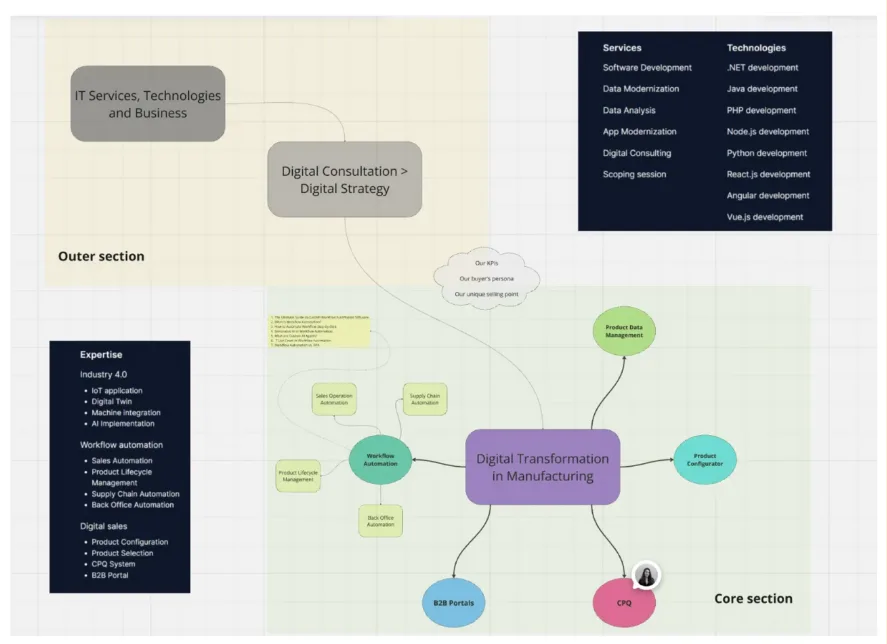
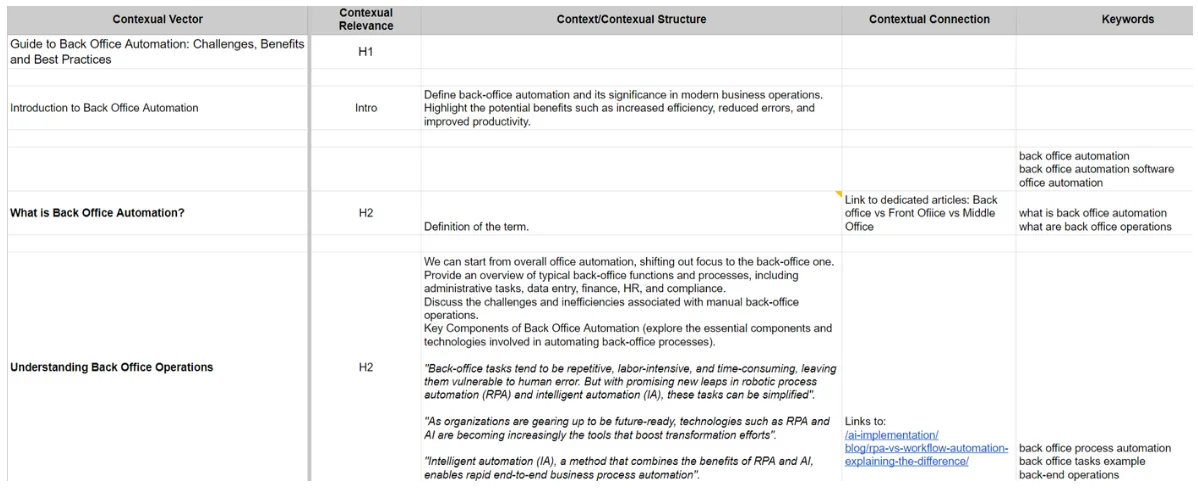
The territory was mapped against the customer they wanted, not against a keyword export: which subjects the company must own, which ones support them, and what connects to what. The map decides what gets written and, more usefully, what does not.
Seven to ten pieces a month, briefed against intent
Each brief carried the structure, the questions to answer and the internal links before anyone wrote a word. Case studies were produced alongside, so a reader who arrived on an explainer had somewhere to go that sells.
Judged on pipeline, not on rankings
The monthly question was how many qualified conversations the work produced and what they were worth, not where the page sat on Tuesday. A featured snippet was a by-product. The pipeline number was the point.
The budget is the first bar. You can barely see it.
Six months, one cluster at a time. The traffic curve is the input and the pipeline is the output, and the distance between these two bars is the entire argument for doing this work in the right order.
One hundred and fifty marketing-qualified leads came out of it and five reached sales-qualified, mostly from the UK and Denmark, the two markets the client cared about. The first sales-qualified lead arrived within ten days of the audit. Pipeline is not revenue and this page will not pretend otherwise, but pipeline of that size against a budget of that size changes what the next quarter is allowed to attempt.
Rankings were never the target. The pipeline was.
If your search reporting leads with positions and sessions, you cannot tell whether the work pays for itself. This one was judged on qualified conversations and what they were worth, which is also the only version of an SEO report a finance director will sit through to the end.
Nobody can promise you this ratio of cost to pipeline. It depends on your deal size, your market and how much ground your site has already lost. What does transfer is the order of operations: make the site readable, map the territory before writing, brief every piece against intent, and judge the whole thing on pipeline. Skip the first step and you are buying articles for a site nobody can crawl.
This work was delivered by MTA Group, which Zero Fluff Digital is part of, by the same specialists who would work on your account. Every figure here comes from the case study MTA published, republished here with their consent. The reviews behind it are public and verified on Clutch, where clients rate the work rather than the agency describing itself.
Want to know what your organic search is actually worth?
30 minutes, no deck. You get a read on whether search can produce pipeline at your deal size, and the one thing that would have to change first.
Book a callNext case studyAudioteka: 7M organic TikTok views in 12 months →