From no TikTok accountto the biggest in the category,in twelve months.
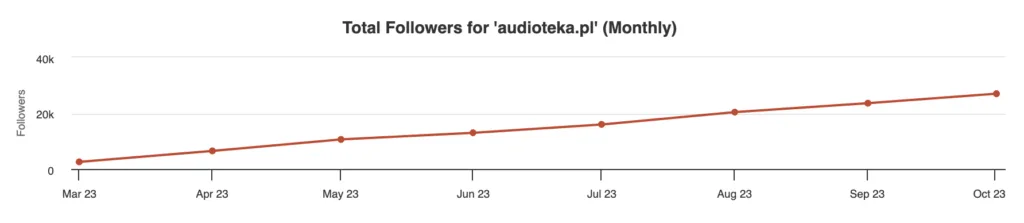
Audioteka sells audiobooks in Poland. Its buyers were older than the audience it needed next, and it had no presence at all on the platform where that audience spends its evenings. Below are the numbers twelve months later, and the ones that explain them.
- 38,900+
- followers gained in 12 months
- 7M
- organic views across the account
- #1
- account in the Polish audiobook category
- 1.1M
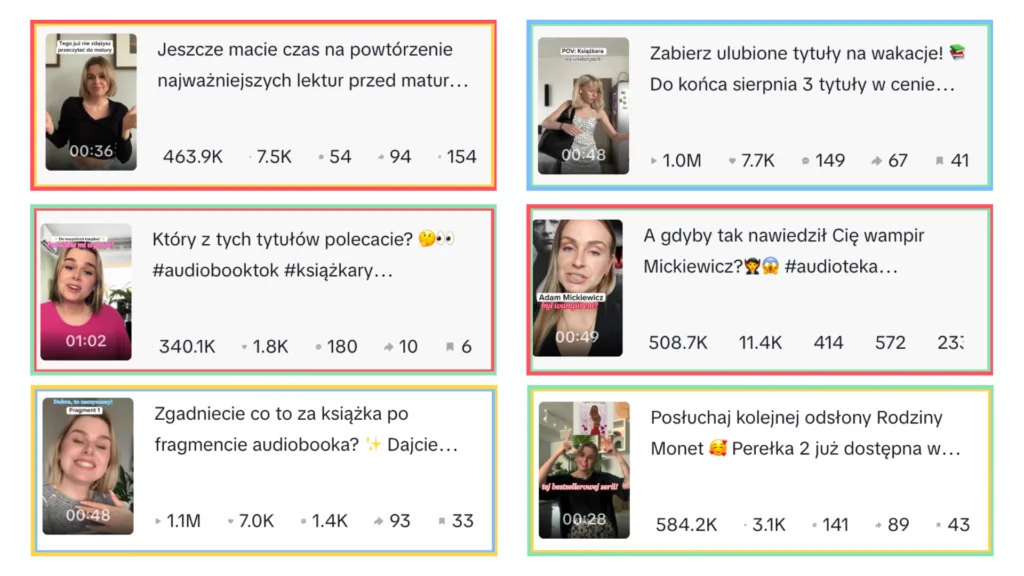
- views on a single video, 1,379 comments
Three problems, and none of them was the budget.
No account, no history
Nothing to build on. No followers, no back catalogue of posts, none of the signal a platform uses to decide who should see you.
The wrong generation
The people already buying were not the people the brand needed next. Reaching a younger audience meant earning attention from strangers, not reminding customers.
A format mismatch
Audiobooks are long, quiet and private. The platform rewards short, loud and public. Everything had to be rebuilt for how people actually watch here.
Four moves. In this order.
A channel of its own, not a repost
The account opened with material made for the platform, in the platform’s own language: handheld, fast, unpolished on purpose. Nothing was recycled from the feeds that already worked elsewhere, because the audience being courted here was not the audience that follows those.
One job per format, never two
Some formats were built to move people into the app. Others were built to earn attention and hold it. Mixing both jobs into one video is the fastest way to produce something that does neither, and the split made every result readable afterwards.
Paid social behind what already worked
Advertising followed organic evidence rather than leading it. Creative that had already proven it could hold a younger audience got budget behind it for installs and recognition, which is a cheaper way to buy reach than testing new ideas at media prices.
Judged at the level of one video
Every idea was read against what it actually returned: new followers, saves, shares, comments. Ideas that worked got made again in a different shape. Ideas that only collected views were dropped, however good the view count looked in a monthly summary.
Views told you almost nothing. Followers per video told you what to make next.
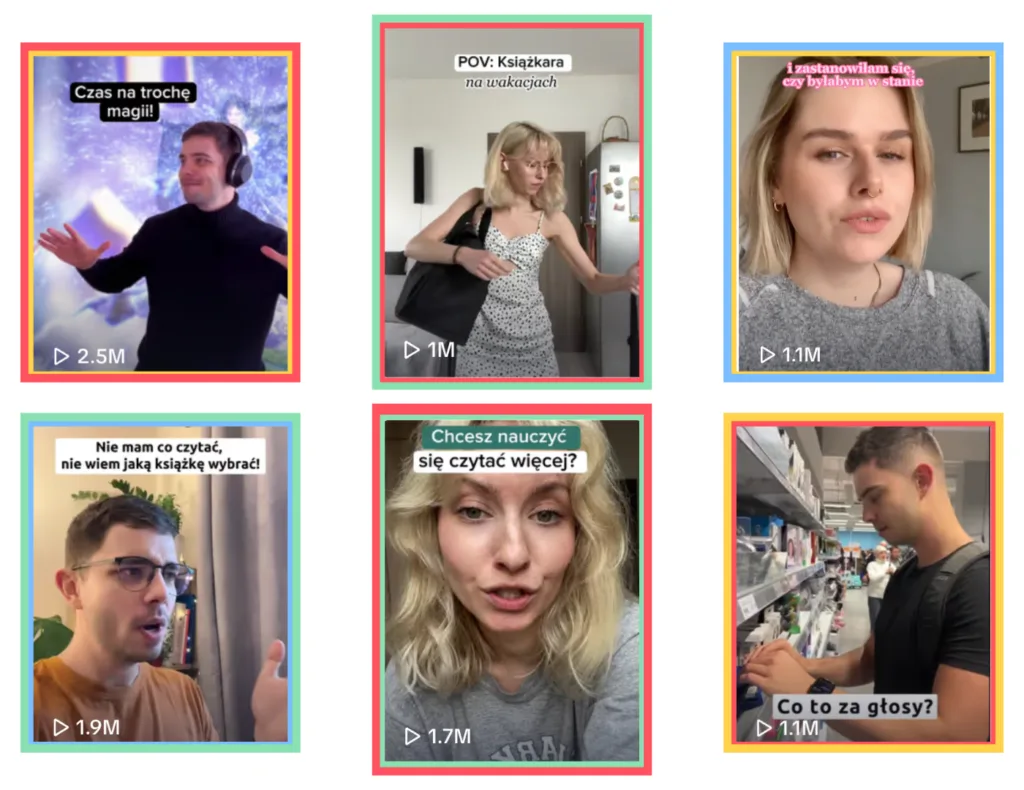
Three ideas carried most of the year. They did not rank in the same order on views as they did on the thing the account was actually there to build.
The teaser brought twice the followers of the guessing game, and the guessing game is the one with 1.1 million views. Reach and audience are two different numbers, and you only see the gap when the reporting goes down to a single piece of work. A monthly summary would have put the loudest video first and sent the next month chasing it.
“Partnering with MTA was a game-changer for us! Their strategies, informed by an in-depth understanding of TikTok trends and data analysis, have played a key role in our growth.”Martyna Wysokińska, Social Media Specialist, Audioteka
The reach was earned here. The method is the part you can copy.
Nobody can promise you seven million organic views. What travels between accounts is narrower and more useful: decide at the unit of work, not at the channel summary. One video, one ad, one landing page, judged on what it returned rather than on what it reached, then repeated in a different shape or dropped.
That is the same discipline your paid channels need, and it is the reason your reporting has to reach further than platform dashboards. If your numbers only exist at the level of a monthly total, every decision you make is an average of things that worked and things that did not.
This work was delivered by MTA Group, which Zero Fluff Digital is part of, by the same specialists who would work on your account. Every figure here comes from the case study MTA published, republished here with their consent. The reviews behind it are public and verified on Clutch, where clients rate the work rather than the agency describing itself.
Want your numbers to read like this?
30 minutes, no deck. You get an honest read on where your measurement stops telling you which piece of work earned the result, and one concrete thing to fix first.
Book a callNext case studySoftware house SEO: $271k pipeline on a $6,362 budget →